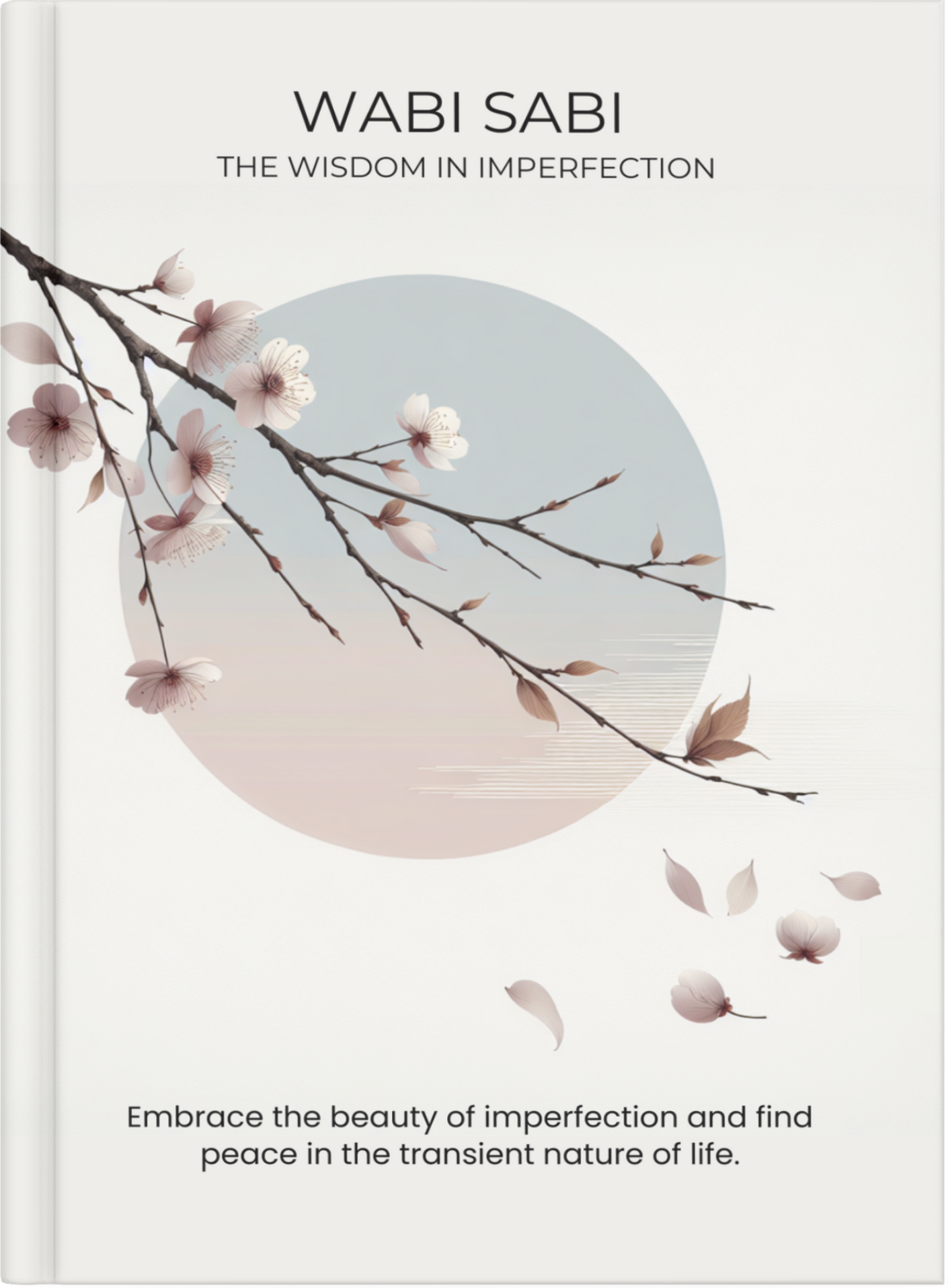
Wabi Sabi: The Wisdom in Imperfection
Nobuo Suzuki
Wabi Sabi: The Wisdom in Imperfection by Nobuo Suzuki explores the Japanese philosophy of embracing imperfection and transience in life. The book delves into how this aesthetic and mindset can lead to a more fulfilling and peaceful existence by appreciating the beauty in the imperfect, the impermanent, and the incomplete.
0:000:00
Keypoint 1: Understanding Wabi Sabi
Wabi Sabi is a profound Japanese concept that invites us to appreciate the beauty found in imperfection and transience. At its core, Wabi Sabi is about recognizing the natural cycle of growth and decay, and finding beauty in the simple, the unrefined, and the authentic. It is a philosophy that encourages us to embrace the imperfections in our lives and surroundings, seeing them not as flaws but as unique characteristics that add depth and richness.
The term 'Wabi' originally referred to the loneliness of living in nature, remote from society, but over time it has come to mean a quiet, rustic simplicity. 'Sabi' refers to the beauty or serenity that comes with age, when the life of the object and its impermanence are evidenced in its patina and wear. Together, Wabi Sabi suggests a way of living that is in harmony with the natural world, accepting the impermanent and imperfect nature of all things.
In a world that often values perfection and permanence, Wabi Sabi offers a refreshing perspective. It teaches us to slow down and appreciate the small, often overlooked details of life. This could be the way sunlight filters through leaves, the texture of a handmade ceramic bowl, or the quiet moments of solitude. By shifting our focus from the pursuit of perfection to the appreciation of the imperfect, we can find a deeper sense of peace and contentment.
Wabi Sabi also encourages us to let go of the need for control and certainty. Life is inherently unpredictable and ever-changing, and by accepting this, we can reduce stress and anxiety. Embracing Wabi Sabi means finding joy in the present moment, understanding that beauty is fleeting, and that each moment is precious precisely because it is temporary. This mindset can lead to a more mindful and fulfilling way of living, where we are more connected to ourselves and the world around us.
The term 'Wabi' originally referred to the loneliness of living in nature, remote from society, but over time it has come to mean a quiet, rustic simplicity. 'Sabi' refers to the beauty or serenity that comes with age, when the life of the object and its impermanence are evidenced in its patina and wear. Together, Wabi Sabi suggests a way of living that is in harmony with the natural world, accepting the impermanent and imperfect nature of all things.
In a world that often values perfection and permanence, Wabi Sabi offers a refreshing perspective. It teaches us to slow down and appreciate the small, often overlooked details of life. This could be the way sunlight filters through leaves, the texture of a handmade ceramic bowl, or the quiet moments of solitude. By shifting our focus from the pursuit of perfection to the appreciation of the imperfect, we can find a deeper sense of peace and contentment.
Wabi Sabi also encourages us to let go of the need for control and certainty. Life is inherently unpredictable and ever-changing, and by accepting this, we can reduce stress and anxiety. Embracing Wabi Sabi means finding joy in the present moment, understanding that beauty is fleeting, and that each moment is precious precisely because it is temporary. This mindset can lead to a more mindful and fulfilling way of living, where we are more connected to ourselves and the world around us.
Unlock the Full Experience
Get access to complete book summaries and more with Wanlanid. Start your journey today by downloading our app on iOS or Android.