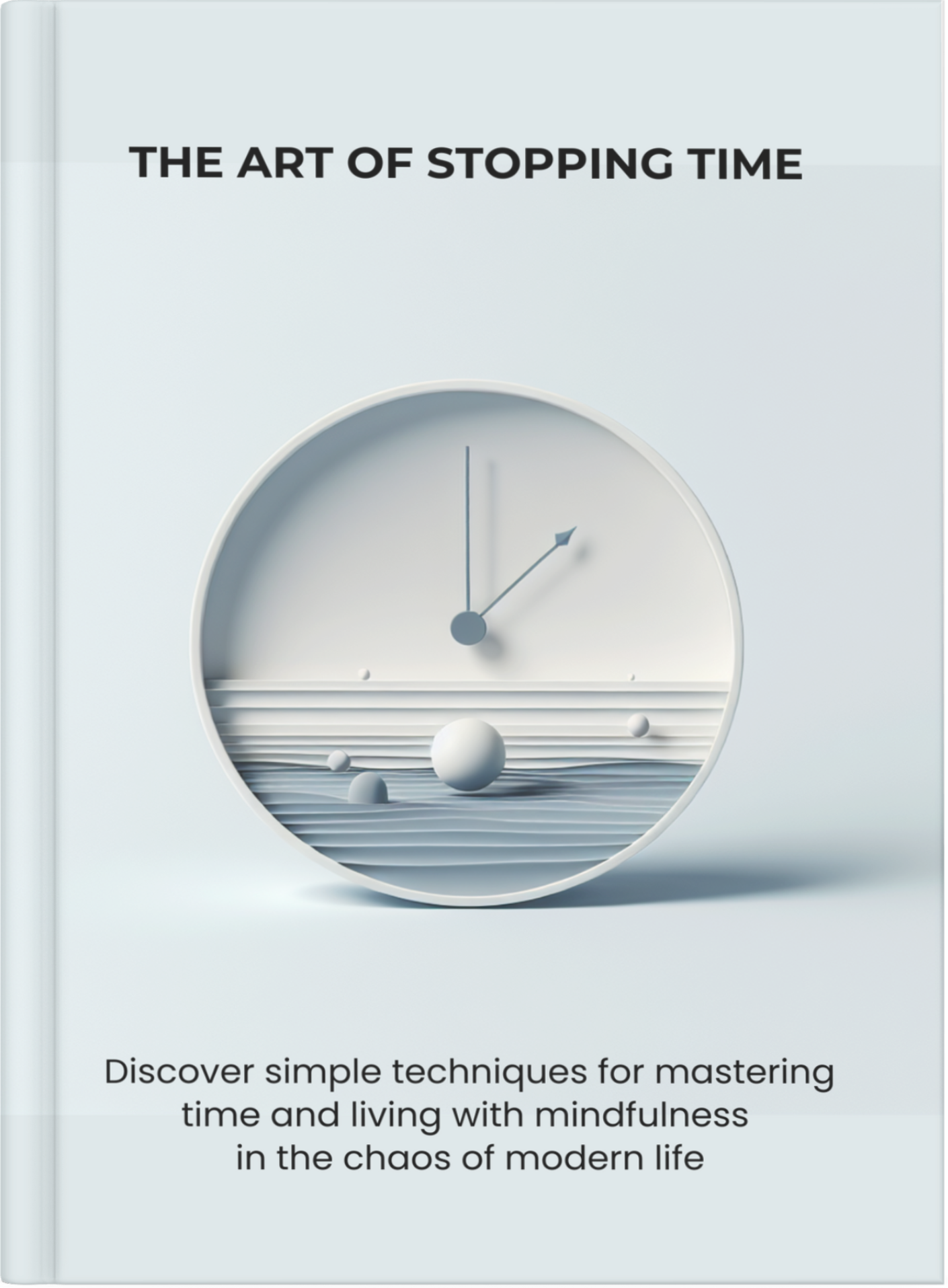
The Art of Stopping Time
Pedram Shojai
The Art of Stopping Time by Pedram Shojai is a guide to reclaiming your time and living a more mindful, fulfilling life. The book offers practical advice and exercises to help readers slow down, prioritize their activities, and focus on what truly matters. By integrating ancient wisdom with modern practices, Shojai provides a holistic approach to managing time and reducing stress.
0:000:00
Keypoint 1: Understanding Time Perception
Time perception is a fundamental aspect of how we experience life. It shapes our daily routines, influences our stress levels, and affects our overall well-being. Understanding how we perceive time can help us manage it more effectively and live more fulfilling lives.
One of the key concepts in understanding time perception is the distinction between 'clock time' and 'psychological time.' Clock time is the objective measurement of time, divided into hours, minutes, and seconds. It is the time we see on our watches and calendars. Psychological time, on the other hand, is subjective and varies from person to person. It is how we internally experience the passage of time. For instance, an hour spent doing something enjoyable may feel like it passes quickly, while an hour spent waiting in a long line may feel like it drags on forever.
Our perception of time is influenced by various factors, including our emotions, attention, and level of engagement in activities. When we are fully engaged and present in an activity, time seems to fly by. This phenomenon is often referred to as 'flow,' a state of deep immersion where we lose track of time. Conversely, when we are bored or anxious, time seems to slow down.
To better manage our time, it is essential to become aware of these subjective experiences and how they impact our daily lives. By practicing mindfulness and being present in the moment, we can alter our perception of time and make it work in our favor. Mindfulness involves paying attention to the present moment without judgment. It helps us become more aware of our thoughts, feelings, and sensations, allowing us to experience time more fully and reduce the feeling of being rushed or overwhelmed.
Another important aspect of understanding time perception is recognizing the cultural and societal influences on how we view time. Different cultures have different attitudes towards time. For example, in some cultures, punctuality and strict adherence to schedules are highly valued, while in others, a more relaxed and flexible approach to time is the norm. Understanding these cultural differences can help us navigate social interactions and reduce time-related stress.
In summary, understanding time perception involves recognizing the difference between clock time and psychological time, being aware of how our emotions and level of engagement affect our experience of time, and practicing mindfulness to stay present in the moment. By doing so, we can manage our time more effectively and lead more balanced, fulfilling lives.
One of the key concepts in understanding time perception is the distinction between 'clock time' and 'psychological time.' Clock time is the objective measurement of time, divided into hours, minutes, and seconds. It is the time we see on our watches and calendars. Psychological time, on the other hand, is subjective and varies from person to person. It is how we internally experience the passage of time. For instance, an hour spent doing something enjoyable may feel like it passes quickly, while an hour spent waiting in a long line may feel like it drags on forever.
Our perception of time is influenced by various factors, including our emotions, attention, and level of engagement in activities. When we are fully engaged and present in an activity, time seems to fly by. This phenomenon is often referred to as 'flow,' a state of deep immersion where we lose track of time. Conversely, when we are bored or anxious, time seems to slow down.
To better manage our time, it is essential to become aware of these subjective experiences and how they impact our daily lives. By practicing mindfulness and being present in the moment, we can alter our perception of time and make it work in our favor. Mindfulness involves paying attention to the present moment without judgment. It helps us become more aware of our thoughts, feelings, and sensations, allowing us to experience time more fully and reduce the feeling of being rushed or overwhelmed.
Another important aspect of understanding time perception is recognizing the cultural and societal influences on how we view time. Different cultures have different attitudes towards time. For example, in some cultures, punctuality and strict adherence to schedules are highly valued, while in others, a more relaxed and flexible approach to time is the norm. Understanding these cultural differences can help us navigate social interactions and reduce time-related stress.
In summary, understanding time perception involves recognizing the difference between clock time and psychological time, being aware of how our emotions and level of engagement affect our experience of time, and practicing mindfulness to stay present in the moment. By doing so, we can manage our time more effectively and lead more balanced, fulfilling lives.
Unlock the Full Experience
Get access to complete book summaries and more with Wanlanid. Start your journey today by downloading our app on iOS or Android.