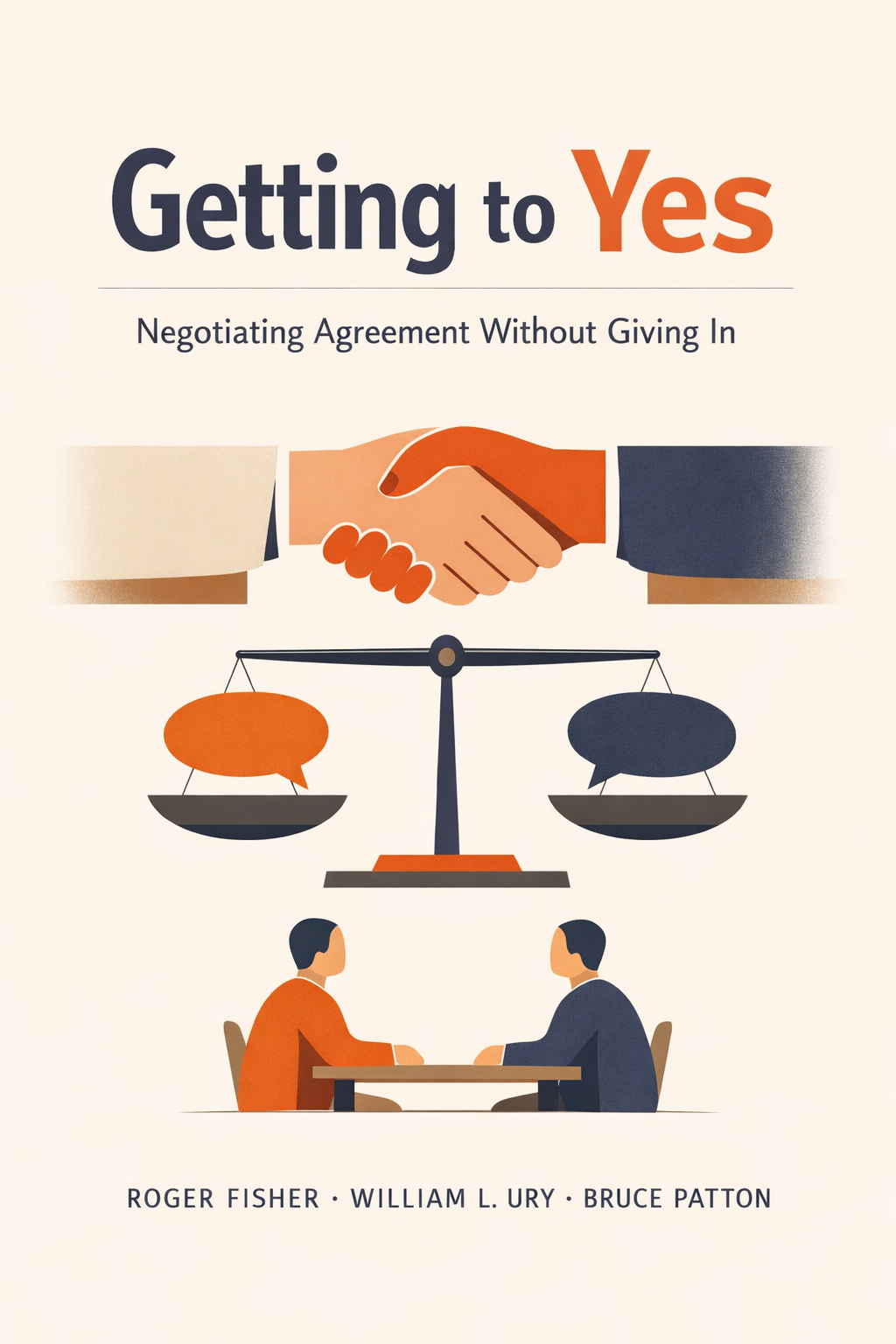
Getting to Yes
Roger Fisher, William L. Ury, Bruce Patton
Getting to Yes is a seminal book on negotiation that introduces the concept of principled negotiation, which focuses on interests rather than positions. The authors provide a framework for reaching mutually beneficial agreements in various negotiation scenarios.
0:000:00
Keypoint 1: Separate the People from the Problem
In any negotiation, it is crucial to separate the people involved from the problem at hand. This principle emphasizes the importance of addressing the issue without letting personal emotions or relationships interfere with the process. Negotiations often become complicated when personal feelings and perceptions cloud judgment, leading to conflicts that could have been avoided. By focusing on the problem rather than the individuals, negotiators can maintain a clear perspective and work towards a solution that benefits all parties involved.
The first step in separating people from the problem is to recognize that everyone has emotions, values, and different perspectives. Acknowledging these human elements can help in understanding the other party's viewpoint and in building a rapport that facilitates open communication. It is essential to listen actively and empathetically, ensuring that each party feels heard and understood. This approach not only helps in defusing tension but also in creating an environment where collaborative problem-solving can thrive.
Another aspect of this principle is to avoid blaming or attacking the other party. Instead of focusing on who is at fault, the emphasis should be on identifying the underlying issues and working together to address them. This shift in focus can prevent defensiveness and hostility, paving the way for a more constructive dialogue. It is also helpful to use 'I' statements rather than 'you' statements, which can come across as accusatory. For example, saying 'I feel concerned about the timeline' is more effective than 'You are delaying the project.'
Furthermore, it is important to establish a clear distinction between the relationship and the substance of the negotiation. While maintaining a good relationship is important, it should not overshadow the need to address the substantive issues at hand. By keeping these two elements separate, negotiators can ensure that personal relationships do not hinder the negotiation process.
In summary, separating the people from the problem is about maintaining objectivity and focusing on the issue rather than personal dynamics. This principle helps in creating a positive negotiation environment where parties can work collaboratively towards a mutually beneficial agreement.
The first step in separating people from the problem is to recognize that everyone has emotions, values, and different perspectives. Acknowledging these human elements can help in understanding the other party's viewpoint and in building a rapport that facilitates open communication. It is essential to listen actively and empathetically, ensuring that each party feels heard and understood. This approach not only helps in defusing tension but also in creating an environment where collaborative problem-solving can thrive.
Another aspect of this principle is to avoid blaming or attacking the other party. Instead of focusing on who is at fault, the emphasis should be on identifying the underlying issues and working together to address them. This shift in focus can prevent defensiveness and hostility, paving the way for a more constructive dialogue. It is also helpful to use 'I' statements rather than 'you' statements, which can come across as accusatory. For example, saying 'I feel concerned about the timeline' is more effective than 'You are delaying the project.'
Furthermore, it is important to establish a clear distinction between the relationship and the substance of the negotiation. While maintaining a good relationship is important, it should not overshadow the need to address the substantive issues at hand. By keeping these two elements separate, negotiators can ensure that personal relationships do not hinder the negotiation process.
In summary, separating the people from the problem is about maintaining objectivity and focusing on the issue rather than personal dynamics. This principle helps in creating a positive negotiation environment where parties can work collaboratively towards a mutually beneficial agreement.
Unlock the Full Experience
Get access to complete book summaries and more with Wanlanid. Start your journey today by downloading our app on iOS or Android.